
In the procurement and engineering of pressure relief devices, precision is not just a requirement—it’s a safety mandate. However, two of the most critical parameters in rupture disk specification are also the most frequently misunderstood: Manufacturing Design Range (MDR) and Burst Tolerance.
Misinterpreting these values can lead to premature disk failure, system downtime, or even catastrophic overpressure events. This guide breaks down these technical concepts according to ASME Section VIII standards to help you make informed decisions for your pressure safety systems.
1. What is Manufacturing Design Range (MDR)?
The Manufacturing Design Range (MDR) is a range of pressure, agreed upon between the user and the manufacturer, within which the marked (stamped) burst pressure must fall.
In simple terms, when you order a rupture disk with a requested burst pressure of 100 psig, it is physically difficult for a manufacturer to hit exactly 100.0 psig every time. The MDR provides a "buffer zone" for the manufacturing process.
Common MDR Percentages:
0% MDR (Total Precision): The stamped pressure will be exactly what you requested (e.g., 100 psig). This often comes with a higher price tag.
-5% or -10% MDR: The manufacturer is allowed to stamp the disk at a pressure lower than requested (e.g., between 90 and 100 psig).
+/- 5% MDR: The stamped pressure can be higher or lower than the target.
Why does MDR matter? If your system's Maximum Allowable Working Pressure (MAWP) is 100 psig, and you accept a +5% MDR, the manufacturer might stamp the disk at 105 psig. This would violate safety codes because the relief device is now set above the vessel's pressure rating.

2. What is Burst Tolerance?
While MDR applies to the stamping of the disk, Burst Tolerance applies to the performance of the disk once it is installed. Even after a disk is stamped at 100 psig, the actual pressure at which it ruptures will vary slightly due to material grain, temperature, and mechanical variables.
According to ASME Section VIII Division 1, the standard burst tolerances are:
Stamped Burst Pressure Range | Standard Burst Tolerance |
Above 40 psig (2.76 barg) | +/- 5% |
Between 15 and 40 psig | +/- 2 psig |
Below 15 psig | Contact Manufacturer (Typically +/- 0.5 to 1 psig) |
3. MDR vs. Burst Tolerance: The "Stacking" Effect
The most important takeaway for a piping engineer is that these two values stack. Let’s look at a real-world example to see how they interact:
Example Scenario:
Requested Burst Pressure: 100 psig
Manufacturing Design Range (MDR): -10%
Standard Burst Tolerance: +/- 5%
Step 1 (MDR): The manufacturer produces the disks and finds the average burst test is 92 psig. They stamp the disk at 92 psig. This is valid because it falls within the -10% range (90-100 psig).
Step 2 (Tolerance): In the field, the disk is stamped 92 psig. Because the tolerance is +/- 5%, the disk could actually burst anywhere between 87.4 psig and 96.6 psig.
If your operating pressure is 90 psig, this disk (which could burst at 87.4 psig) will likely fail prematurely, causing an expensive "nuisance burst."
4. How to Choose the Right MDR for Your System
Choosing the right MDR is a balance between safety, operational uptime, and cost. Here are three professional tips:
A. Match MDR to Your Operating Ratio
If your system operates very close to the burst pressure (high operating ratio), you should specify 0% MDR or a Min/Max MDR. This ensures the stamped pressure doesn't drift too low, which would cause the disk to operate too close to its limit and fatigue prematurely.
B. Consider the "Negative Only" Range
In most safety-critical applications, engineers specify a Negative MDR (e.g., -5% or -10%). This ensures that the disk will never be stamped higher than the vessel's MAWP, keeping you in compliance with ASME standards without paying for the premium price of a 0% MDR.
C. Verify the Temperature
Remember that both MDR and Tolerance are calculated at a specific Coincident Temperature. If your disk is rated at 100 psig at 72°F but operates at 300°F, the actual burst pressure will drop. Ensure your MDR is specified at the actual operating temperature to avoid calculation errors.
5. Why Leading Manufacturers Prefer Laser-Slotted Technology
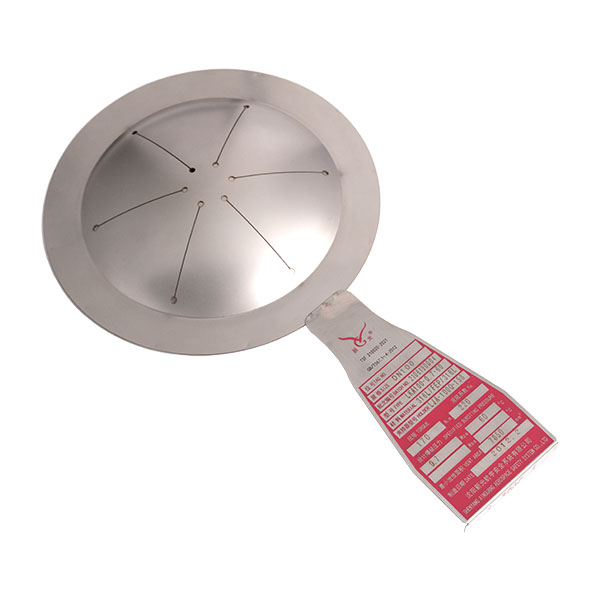
To minimize the impact of MDR, many modern plants are switching to Scored or Laser-Slotted Rupture Disks. Unlike older "composite" disks that rely on material thickness alone, laser-slotted disks allow manufacturers to achieve much tighter MDRs (often 0% or -2%) with much higher consistency. This reduces the "safety gap" required in your system design, allowing for higher operating pressures and better efficiency.
Understanding the difference between Manufacturing Design Range and Burst Tolerance is the key to avoiding "phantom" pressure relief issues. Always remember: MDR is for the factory; Tolerance is for the field.
When in doubt, consult with a qualified rupture disk manufacturer to perform a Safety System Audit. By aligning your MDR specifications with your actual operating pressures, you can extend the life of your disks and prevent costly unplanned shutdowns.
Searching for high-precision rupture disks with 0% MDR? Browse our ASME-certified product catalog or use our Online Sizing Tool to find the perfect fit for your pressure vessel.
